This post includes affiliate links, meaning I may earn from qualifying Amazon purchases. Thank you for supporting my work!
If you’ve recently stopped buying formula and thought your grocery bill would finally go down — only to watch your toddler demolish an entire container of berries in one sitting — welcome to the toddler berry phase.
Strawberries, blueberries, raspberries, blackberries… suddenly they’re all gone, and your grocery receipt is climbing again. It can feel frustrating and expensive. But there’s a reason this phase is so common — and surprisingly, it’s one of the healthiest food fixations toddlers can have.
Below, we’ll break down why toddlers love berries, what science says about their benefits, and how parents can support this phase without blowing the grocery budget.
Quick Take for Parents
- Toddlers are naturally drawn to berries because they’re sweet, colorful, and easy to eat
- Berries are rich in antioxidants, fiber, and vitamin C that support brain, immune, and gut health
- Frozen berries are just as nutritious as fresh and often more budget-friendly
- With a few smart strategies, the berry phase can be healthy and affordable
What Is the Toddler Berry Phase?
The toddler berry phase refers to a common stage where young children seem to eat endless amounts of berries, often preferring them over other foods.
This isn’t random — it’s a mix of developmental preference, sensory appeal, and nutritional payoff.
Why Toddlers Love Berries So Much
1. Sweet Flavor Without Being Overwhelming
Berries offer natural sweetness without the intense sugar hit of processed snacks, making them especially appealing to developing taste buds.
2. Perfect Texture for Little Hands
Berries are:
- Soft
- Easy to chew (especially when ripe or cooked)
- Simple to pick up without utensils
This independence matters to toddlers.
3. Bright Colors Grab Attention
Red, blue, and purple foods naturally attract children visually. Berries look fun — and toddlers eat with their eyes first.
The Nutritional Power of Berries for Toddlers and Kids
Berries may be small, but they deliver big nutritional benefits during early childhood.
Rich in Antioxidants That Support Growing Brains
Berries contain antioxidants and polyphenols that help reduce oxidative stress — a process linked to cellular damage. Antioxidants play a role in protecting developing brains and bodies.
Evidence-Backed Brain Benefits
Research published in the European Journal of Nutrition found that children who consumed wild blueberries showed improvements in attention and reaction time shortly after intake.
While much of this research focuses on older children, it helps explain why nutrient-dense berries are encouraged from early childhood onward. Read the study here.
Immune and Digestive Support
Berries provide:
- Vitamin C, which supports immune function and tissue growth
- Fiber, which aids digestion and supports a healthy gut microbiome
These nutrients are especially important during rapid toddler growth.
Do Berries Support Long-Term Health?
While long-term studies often focus on adults, research suggests berry consumption is linked to:
- Improved markers of heart and metabolic health
- Reduced inflammation
- Better glucose metabolism
Some studies also suggest polyphenols in berries may play a role in lowering the risk of certain autoimmune conditions. Together, these findings point toward lifelong health benefits when berries are part of a balanced diet.
Why the Berry Phase Feels So Expensive
Berries are:
- Perishable
- Often sold in small quantities
- Frequently out of season
So when a toddler eats them daily — or multiple times a day — costs add up fast. The good news? There are ways to keep this phase nutritious without overspending.
How to Survive the Toddler Berry Phase on a Budget
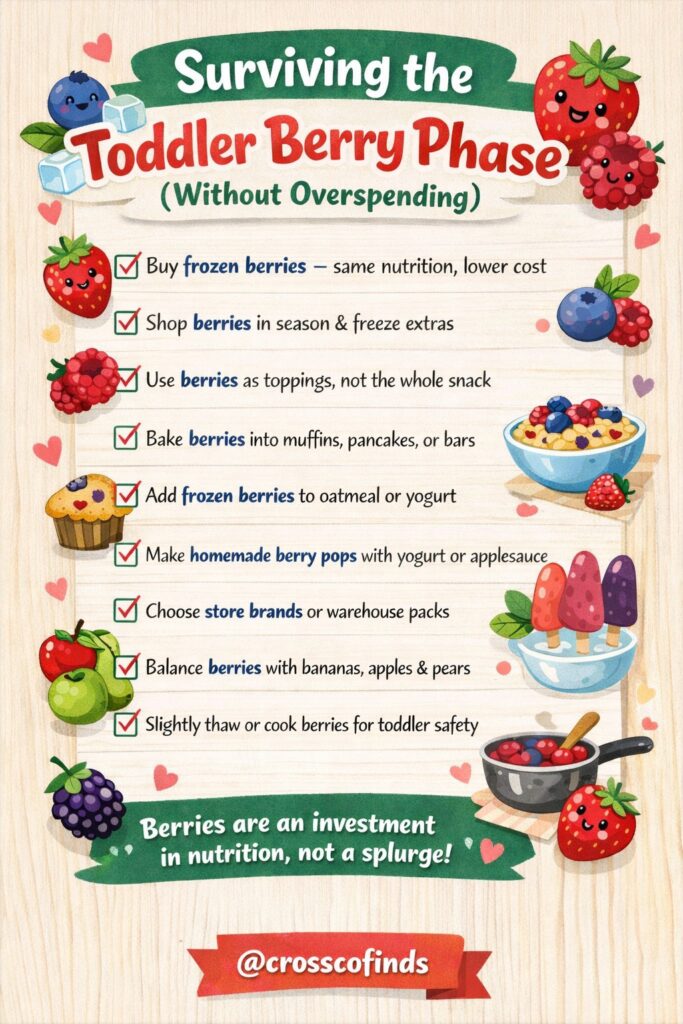
1. Frozen Berries Are Just as Nutritious
Frozen berries are often picked at peak ripeness and frozen immediately, preserving vitamins and antioxidants. In many cases, they’re nutritionally comparable — or superior — to fresh berries that sit in transit for days.
Budget win: Frozen berries cost less per ounce, last for months, and reduce food waste.
2. Easy Ways to Serve Frozen Berries to Toddlers
Stir Into Warm Foods
- Oatmeal
- Yogurt
- Cream of wheat
Heat naturally softens berries, making them easier for toddlers to eat.
Serve as Cold “Berry Bites”
- Slightly thaw
- Chop if needed
- Serve cold for teething relief
Bake Them In
Frozen berries work well in:
- Muffins
- Banana bread
- Baked oatmeal
- Pancakes or waffles
No need to thaw — toss with a little flour to prevent bleeding.
DIY Berry Pops
Blend frozen berries with:
- Yogurt
- Applesauce
- Coconut milk
Freeze in molds for a low-sugar, toddler-friendly treat. I personally have used these molds from Amazon, and they work great! Buy on Amazon Here.
3. Shop Seasonal and Freeze Extras
Berries are cheapest when in season:
- Strawberries: spring to early summer
- Blueberries: summer
- Raspberries & blackberries: mid-summer
When prices drop:
- Buy extra
- Wash, dry, and freeze at home
4. Use Store Brands and Warehouse Options
If your toddler is deep in the berry phase:
- Store-brand frozen berries are often identical to name brands
- Warehouse packs lower cost per serving
Look for:
- Single-ingredient labels
- No added sugars or syrups
5. Balance Berries With Other Fruits
Berries are powerful — but they don’t need to stand alone.
To stretch your budget:
- Pair berries with bananas, apples, pears, or oranges
- Use berries as toppings instead of the main portion
- Mix into fruit salads or yogurt bowls
The Big Picture: Berries Are an Investment, Not a Waste
The toddler berry phase may feel expensive, but berries provide:
- Antioxidants for brain and immune health
- Fiber for digestion and gut support
- Natural sweetness without added sugar
With smart shopping and serving strategies, berries can remain a high-value staple, not a budget stressor.
Sometimes the foods that look the most expensive are actually the most beneficial.
Frequently Asked Questions About the Toddler Berry Phase
Why do toddlers eat so many berries?
Toddlers are drawn to berries because they’re sweet, colorful, easy to eat, and nutrient-dense. Their texture and flavor align perfectly with developmental preferences.
Are berries really important for toddlers?
Yes. Berries provide vitamin C, fiber, and antioxidants that support immune health, digestion, and cognitive development.
Are frozen berries healthy for kids?
Absolutely. Frozen berries retain most of their nutrients and are a cost-effective, long-lasting option for families.
How can I save money when my toddler only wants berries?
Buying frozen berries, shopping seasonal sales, freezing fresh berries, and using berries as toppings instead of main portions can significantly reduce grocery costs.
How should berries be served safely to toddlers?
Always cut berries appropriately for your child’s age to reduce choking risk. Softened, cooked, or chopped berries are often easier for younger toddlers to manage.