If you’re in the thick of teething, you already know how uncomfortable it can be—fussiness, drooling, and babies chewing on anything they can grab. One simple remedy that has worked wonders for my little one is frozen celery. It’s natural, low-mess, inexpensive, and provides soothing relief without added sugar or processed teething snacks.
- Only offer frozen celery to babies who are eating solids (typically 6+ months) and always supervise while eating.
Why Frozen Celery Helps With Teething (Backed by Science)
Teething pain happens when new teeth push through the gums, causing inflammation and pressure. Frozen celery can help in three ways:
- Cold reduces inflammation
Chilled foods help numb nerve endings and calm swelling—like a baby-friendly ice pack. - Chewing provides counter-pressure
Biting down gently massages swollen gums, reducing pain signals to the brain. - Fibrous texture satisfies gnawing urges
Celery gives babies something safe to chew on without crumbling like crackers or other snacks.
In short, frozen celery works on multiple levels: cold, pressure, and texture.
Natural Benefits of Celery for Teething Babies
Celery isn’t just effective because it’s cold—its natural properties make it a great teething snack:
- Contains anti-inflammatory plant compounds like apigenin and luteolin
- About 95% water, so it stays soft and soothing when frozen
- Low sugar and no sticky residue on gums or new teeth
- Gentle texture that gives pressure without being hard like ice cubes
It’s a cleaner alternative to frozen fruit or teething biscuits.
How to Prepare Frozen Celery for Teething
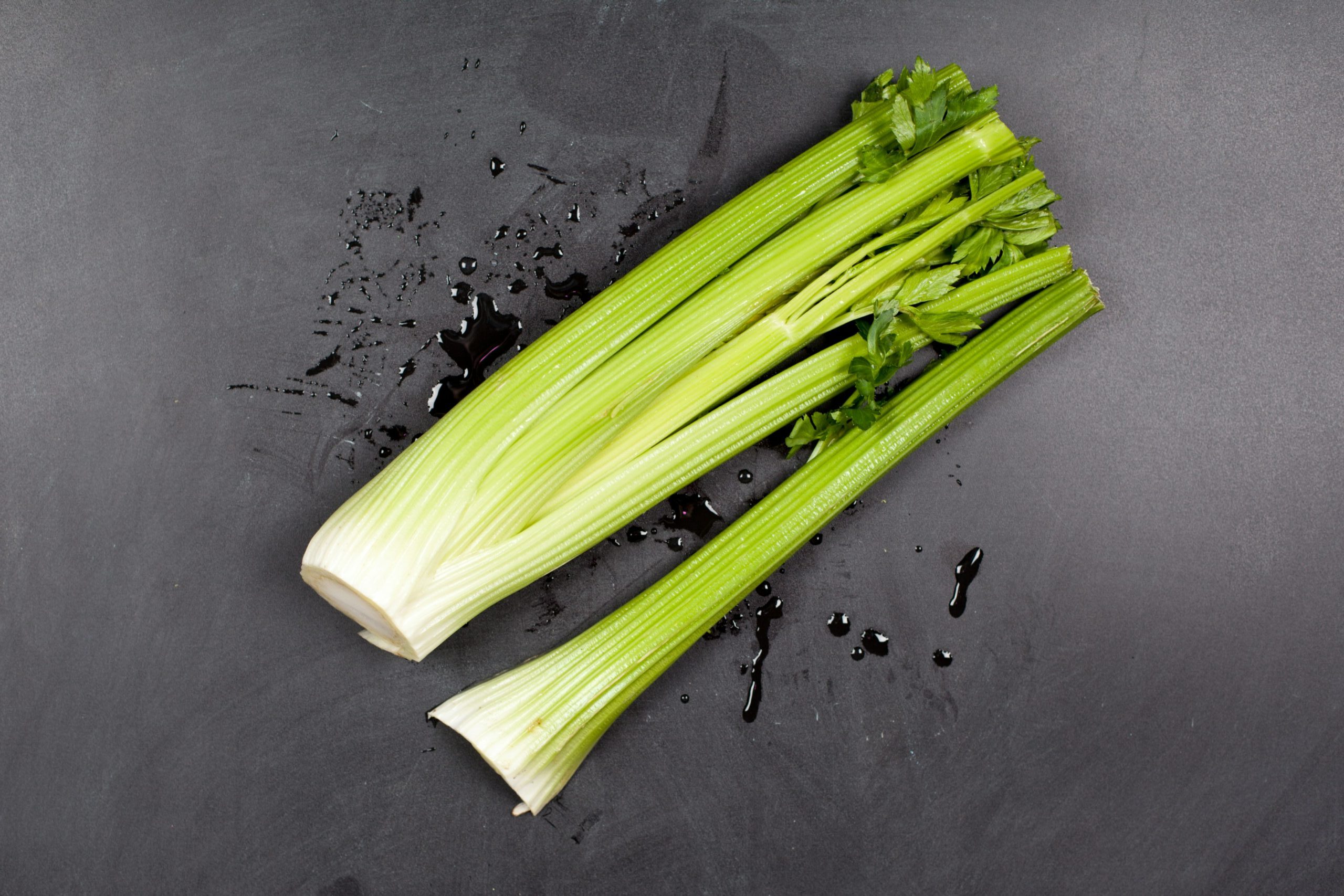
- Wash celery thoroughly
- Cut into pieces long enough for baby to hold
- Peel outer strings if needed for easier chewing
- Freeze until fully firm
- Serve straight from the freezer
Tip: Worried about cold hands? Wrap one end in a paper towel and then when the celery starts to wilt, switch sides!
I keep a batch in the freezer so I can grab one when teething hits.
Is Frozen Celery Safe for Babies?
Yes—when prepared properly and offered to babies who are already eating solids. Because celery is fibrous, it should always be served with close supervision.
Safety Tips
- Only offer to babies already eating solid food (usually 6+ months)
- Always supervise while eating
- Peel strings to prevent large fibers from detaching
- Avoid small pieces that could break off
- Ask your pediatrician if you’re unsure about readiness
Frozen Celery vs. Other Teething Remedies
Frozen celery
✔ Low sugar
✔ Clean + natural
✔ Satisfying texture
✘ Not suitable before solids
✘ Not suitable for travel
Frozen fruit
✔ Tasty + soothing
✘ Sticky + higher sugar
Silicone teethers
✔ Designed for chewing
✘ No nutritional benefit
Teething crackers
✔ Easy for travel
✘ Processed ingredients + messy crumbs
Frozen celery is a great low-mess option to rotate in with other teething solutions.
Why I Love This Trick
- Almost no mess (just maybe a little water!)
- Natural + budget-friendly
- Helps instantly during fussy teething phases
- Doubles as a snack as baby gets older
- No sticky residue on faces, hands, or clothes
It’s been one of my favorite baby-friendly teething hacks.
FAQs About Frozen Celery for Teething
Is frozen celery safe for babies?
Yes, for babies who are eating solids and can handle chewable textures. Always supervise.
What age can babies chew celery?
Typically 6+ months, depending on readiness and pediatric guidance.
Does frozen celery actually help teething pain?
Yes—cold reduces inflammation, chewing relieves pressure, and the texture is soothing.
Is celery better than frozen fruit for teething?
In many cases, yes. Celery is cleaner and lower in sugar, making it great for frequent use.